
Stretching is a fundamental part of a healthy lifestyle, helping to improve flexibility, reduce muscle tension, and enhance overall mobility. If you’re new to stretching or looking for easy ways to incorporate it into your daily routine at home, this beginner’s guide is here to help. You don’t need any special equipment or a gym membership — just a little space and a few minutes a day to start feeling the benefits.
Why Stretching Matters
Stretching offers numerous benefits beyond just feeling looser. Here’s why it’s worth adding stretching to your daily routine:
– Improves Flexibility: Stretching regularly lengthens muscles and tendons, helping you move more freely.
– Reduces Muscle Tightness: Sitting or standing for long periods can cause muscles to stiffen; stretching helps relieve that tension.
– Enhances Posture: Stretching key muscle groups can support better posture and reduce the risk of back pain.
– Promotes Circulation: Stretching increases blood flow to your muscles, aiding recovery and reducing soreness.
– Prepares Your Body: Stretching before exercise helps warm up muscles and reduce the chance of injury.
Getting Started: What You Need
One of the best things about stretching at home is that you need minimal equipment:
– A Comfortable Space: A yoga mat or carpeted floor works well.
– Comfortable Clothing: Wear loose, breathable clothes that allow for movement.
– Optional Props: A yoga strap, towel, or resistance band can assist with some stretches but aren’t necessary.
Remember to stretch when your muscles are warm, ideally after a light walk or gentle movement. Stretching cold muscles can increase the risk of injury.
Basic Stretching Guidelines
To get the most from your stretching routine, keep these tips in mind:
– Hold Each Stretch: Aim for 15 to 30 seconds per stretch, repeating 2 to 3 times.
– Breathe Deeply: Don’t hold your breath; steady breathing helps your muscles relax.
– Stretch Both Sides: Make sure to stretch both your right and left sides evenly.
– Avoid Pain: Stretch to the point of mild tension, not pain.
– Be Consistent: Daily stretching yields the best results, even if it’s just 5 to 10 minutes.
Simple Stretches to Try at Home
Here are some beginner-friendly stretches targeting common tight areas:
1. Neck Stretch
– Sit or stand tall.
– Slowly tilt your head toward your right shoulder until you feel a gentle stretch on the left side of your neck.
– Hold, then switch sides.
2. Shoulder Stretch
– Extend your right arm across your chest.
– Use your left hand to gently press your right arm toward your chest.
– Hold, then switch arms.
3. Chest Opener
– Clasp your hands behind your back.
– Straighten your arms and gently lift your hands upward while opening your chest.
– Hold and breathe deeply.
4. Seated Forward Fold
– Sit on the floor with your legs extended straight ahead.
– Slowly lower your torso toward your legs, reaching for your toes or shins.
– Keep your back as straight as possible.
– Hold and breathe.
5. Cat-Cow Stretch (Spinal Mobility)
– Start on your hands and knees.
– Inhale, arch your back (cow position), lifting your head and tailbone.
– Exhale, round your back (cat position), tucking your chin and pelvis.
– Repeat gently several times.
6. Hamstring Stretch
– Lie on your back.
– Lift one leg and hold the back of your thigh or calf.
– Keeping your leg straight, gently pull it toward your head without forcing.
– Hold, then switch legs.
7. Quadriceps Stretch
– Stand tall and hold onto a chair for balance if needed.
– Bend your right knee and hold your right ankle behind you.
– Keep your knees close together and push hips slightly forward.
– Hold, then switch legs.
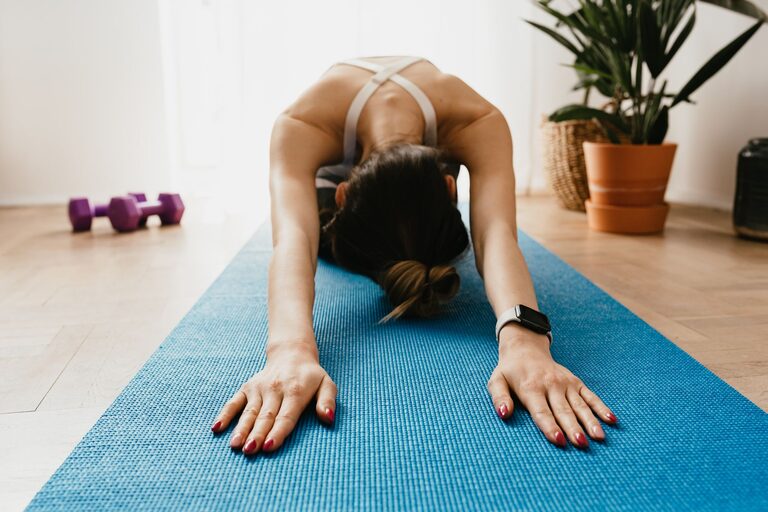
8. Child’s Pose (Relaxation Stretch)
– Kneel on the floor and sit back on your heels.
– Lean forward, extending your arms in front and lowering your forehead to the floor.
– Hold and take deep breaths to release tension.
Building a Routine
For beginners, a simple routine of 10 to 15 minutes a day can make a big difference:
- Start with a few neck and shoulder stretches.
- Move on to torso and back stretches like cat-cow and chest openers.
- Finish with lower body stretches such as hamstrings and quadriceps.
- End with a relaxing pose like child’s pose.
Try to stretch at the same time each day, such as in the morning to wake up your body or in the evening to wind down.
Tips for Success
– Listen to Your Body: Stretch gently and modify any stretch if it feels uncomfortable.
– Stay Hydrated: Drinking water supports muscle health.
– Use Videos or Apps: Guided stretching videos can provide structure and variety.
– Combine with Other Activities: Stretching complements walking, yoga, or light strength training.
– Be Patient: Flexibility improves gradually with consistent effort.
When to Avoid Stretching
If you experience sharp pain, swelling, or an injury, avoid stretching that area and consider consulting a healthcare professional before continuing. Also, don’t stretch aggressively before intense workouts; dynamic warm-ups are usually better before exercising.
—
Stretching at home is a simple way to promote flexibility, reduce stiffness, and support overall health. With this beginner’s guide, you can create a gentle, effective stretching routine tailored to your needs and lifestyle. Remember, the key is consistency and listening to your body. Happy stretching!